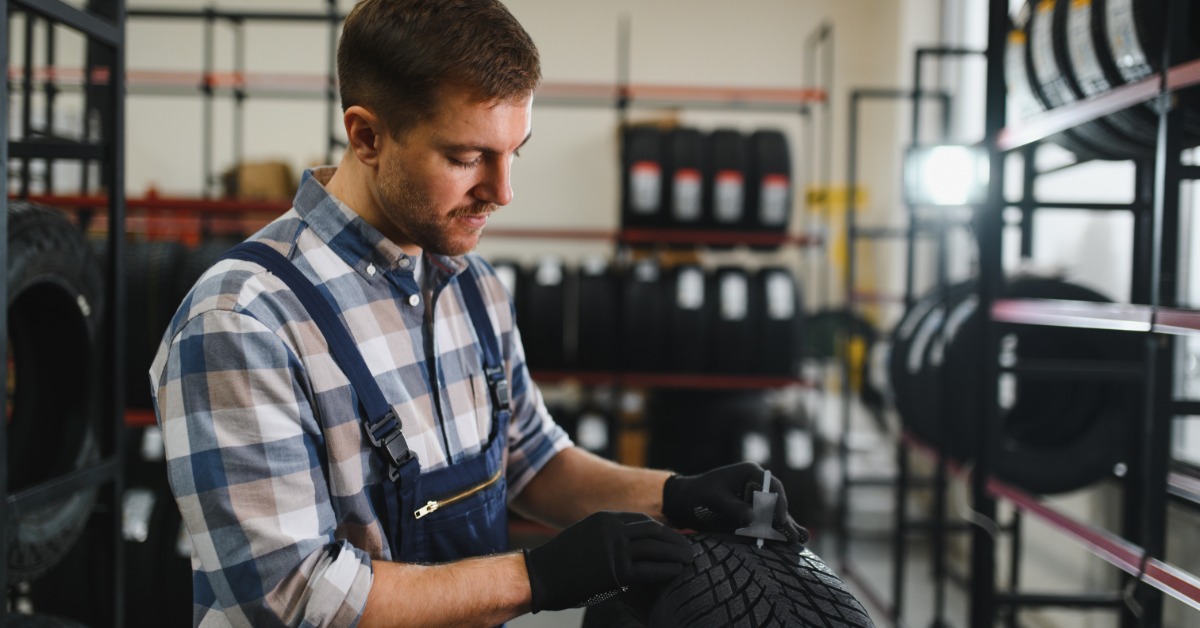
Tires don’t need to look completely bald before their performance starts declining. Worn tire treads reduce the grooves available to move water away from the contact patch, making wet-road traction especially important to watch.
Regular inspections can catch deterioration before the vehicle begins feeling noticeably unstable. The goal isn’t squeezing every possible mile from a tire. It’s replacing it while dependable grip still remains.
Why Tire Tread Condition Matters
Tread provides the pattern that helps a tire maintain useful contact with the road. As the grooves become shallower, the tire has less room to channel water and deal with loose surfaces.
That difference may be subtle during ordinary dry driving. Rain, sudden braking, highway speeds, or an emergency maneuver can expose the loss of traction much faster.
Wear Is Rarely Perfectly Even
A tire may look acceptable from one angle while another section is considerably more worn. Check across the full width rather than inspecting only the outside shoulder.
Drivers reviewing practical maintenance reading should still rely on hands-on inspections because general information can’t reveal what is happening on a particular tire.
Look for More Than a Shallow Pattern
Tread depth is only part of the picture. Cracks, cuts, exposed material, bulges, puncture damage, and unusual wear patterns can signal separate problems.
Uneven wear may also point toward alignment, suspension, inflation, or rotation issues. Replacing a tire without addressing the underlying cause can allow the new one to wear poorly as well.
People browsing everyday driving topics often encounter broad maintenance advice, but tire condition deserves direct visual attention.
| Tire Change | Possible Meaning | Useful Response |
|---|---|---|
| Center wear | Possible overinflation pattern | Check pressure and condition |
| Edge wear | Possible underinflation pattern | Inspect pressure and tire |
| One-sided wear | Alignment may be involved | Have alignment checked |
| Cracks or bulges | Tire damage or aging | Get professional inspection |
Check Tires on a Regular Routine
Choose one predictable time each month to inspect all four tires. Look at tread condition, inflation, sidewalls, and anything embedded in the rubber.
Also inspect the spare if your vehicle carries one. A forgotten spare can lose pressure or deteriorate while sitting unused.
Broader practical ownership guides can help build maintenance habits, but your vehicle manufacturer’s recommendations should remain the main reference for pressure, tire specifications, and rotation schedules.
Pay Attention After Road Impacts
Potholes, curbs, and road debris can damage a tire even when it doesn’t immediately lose air. After a significant impact, check the sidewall and watch for steering vibration or changes in handling.
A tire professional can examine damage that isn’t easy to judge from the driveway.
Common Tire Mistakes That Reduce Safety
One mistake is assuming that plenty of remaining mileage means a tire is automatically safe. Mileage isn’t the only factor. Wear pattern, physical damage, age, maintenance, climate, and storage conditions also matter.
Another mistake is replacing one visibly worn tire without checking the others. Tires on the same vehicle experience related loads and operating conditions, so a full inspection gives a clearer picture.
Don’t ignore recurring low pressure either. Repeatedly adding air without finding the reason can hide a puncture, damaged valve, wheel problem, or another issue requiring repair.
Frequently Asked Questions
Can worn tires still feel normal on dry roads?
Yes. Moderate driving on dry pavement may not immediately expose declining traction. Wet roads, harder braking, or emergency steering can reveal the difference much more clearly.
Should all four tires be inspected together?
Yes. Comparing all four helps identify uneven wear and may reveal alignment, inflation, suspension, or rotation patterns that aren’t obvious when examining only one tire.
Does uneven tread automatically mean I need new tires?
Not always. The severity and remaining tire condition matter. A tire shop or qualified technician can determine whether correction, rotation, repair, or replacement is appropriate.
Replace Tires Before Grip Becomes a Guess
Waiting for a tire to become obviously bald gives away part of your safety margin. Inspect the entire tread and sidewalls regularly, investigate unusual wear, and address recurring pressure loss rather than treating it as routine.
When replacement is justified, handle it before poor weather or an emergency maneuver demonstrates how much traction has already disappeared.