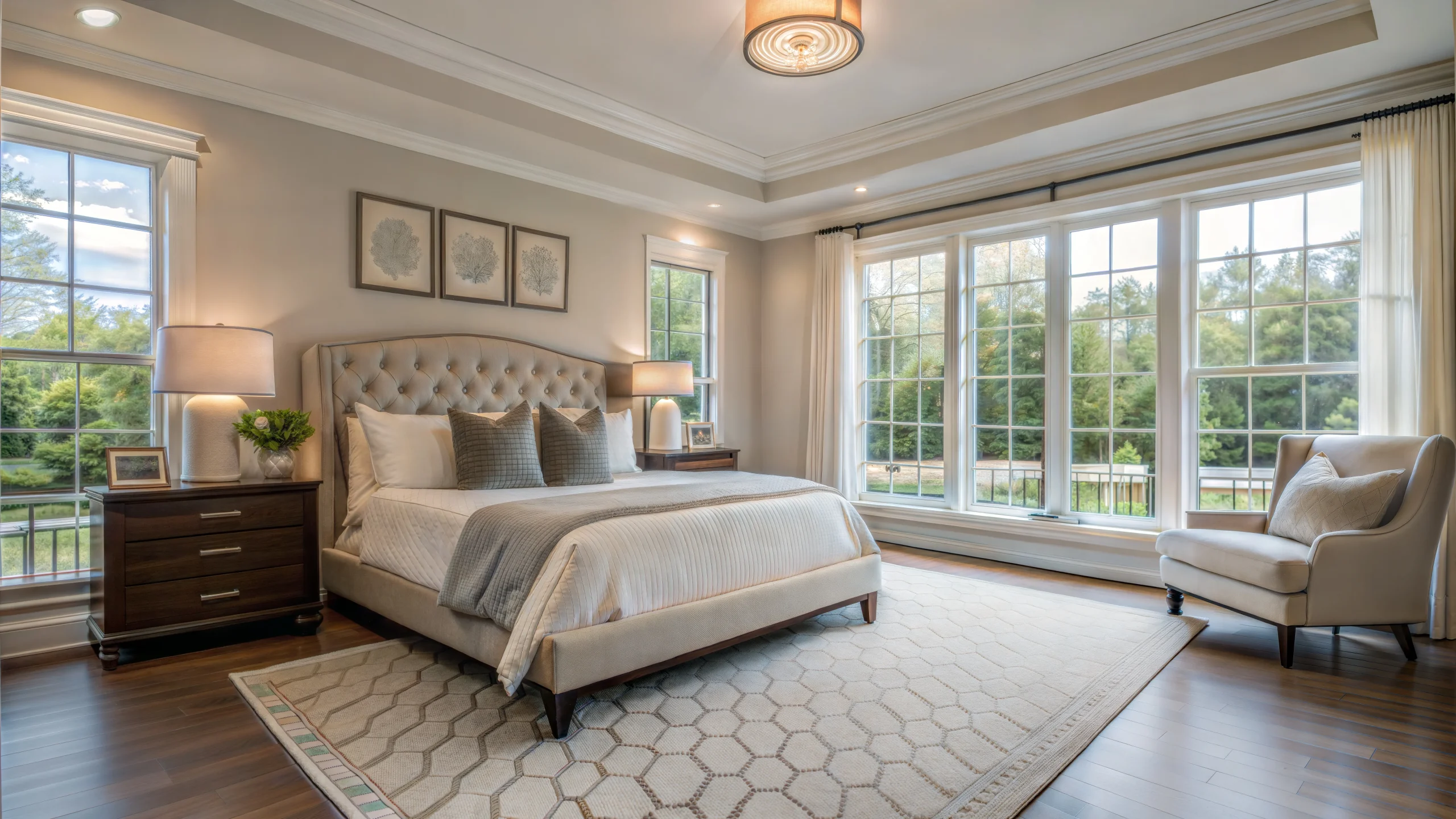
A rug can be attractive on its own yet still make an entire room feel slightly wrong. Awkward rug sizes often create weak furniture connections, uneven visual weight, or empty strips of floor that seem accidental. Fixing the problem usually depends less on buying the biggest rug possible and more on choosing dimensions that relate clearly to the furniture arrangement.
Why Rug Proportion Changes the Whole Room
Furniture and rugs work visually as a group. When a rug is too narrow beneath a sofa, the seating can appear larger and heavier than it actually is. A rug that extends too far in one direction may create the opposite problem by making the furniture seem strangely off-center.
Start by looking at the complete seating area rather than measuring one piece of furniture. Sofa width, chair placement, walking space, and nearby tables all affect the ideal proportions.
Use Furniture as the Measurement Guide
In many living rooms, allowing the front legs of major seating pieces to rest on the rug creates a clear connection without requiring wall-to-wall coverage. Larger rooms may support arrangements where all furniture legs sit comfortably inside the rug boundary.
Looking through different room styling references can help you notice how designers create visible relationships between floor coverings and furniture rather than treating rugs as isolated decoration.
Create Consistent Borders Around the Rug
Uneven exposed flooring is one reason a correctly sized rug can still feel awkward. If one side leaves a wide border while another nearly touches the wall, the arrangement may appear shifted even when the furniture is technically centered.
Try to maintain reasonably consistent breathing room around the rug where the room allows it. Comparing interior proportions with cozy home ideas can also make it easier to see why visual balance matters more than filling every available inch.
| Rug Problem | Visual Effect | Better Direction |
|---|---|---|
| Too narrow | Furniture looks disconnected | Extend beyond seating width |
| Too short | Room feels compressed | Cover more of the furniture zone |
| Oversized | Floor disappears | Leave a visible perimeter |
| Off-center | Layout looks accidental | Align with the main furniture group |
Let the Layout Decide the Orientation
A rectangular rug shouldn’t automatically follow the longest wall. Its orientation should support the direction of the furniture grouping.
For example, a long living room with a sofa facing two chairs may look better when the rug stretches across the seating arrangement instead of running toward the far end of the room. Studying outdoor design inspiration can even be useful for understanding how clearly defined zones and open borders influence perceived proportion in larger spaces.
Common Rug Placement Mistakes
One common mistake is centering the rug in the room while ignoring where the furniture actually sits. Rooms are experienced through furniture placement, not through architectural measurements alone.
Another problem is pushing a small rug beneath a coffee table and leaving every seating piece outside it. That arrangement can make the rug look like a floating island. If replacing it isn’t practical, shifting furniture slightly closer together may improve the relationship.
Avoid assuming that every visible floor area needs perfect symmetry. Doorways, fireplaces, angled walls, and built-ins sometimes make controlled asymmetry look more natural.
Frequently Asked Questions
Should a rug be wider than the sofa?
Usually, giving the rug some visible width beyond the sofa helps the seating arrangement feel grounded. The exact amount depends on the room, nearby furniture, and available floor space rather than one universal measurement.
Can a small rug work in a large living room?
Yes, but it needs a clear purpose. A small rug may work beneath a compact conversation area or coffee table, though it often looks disconnected when surrounded by widely spaced full-size furniture.
Should all furniture legs sit on the rug?
Not necessarily. Front-leg placement often works well in medium rooms, while larger rugs can hold every furniture leg. Consistency across the major seating pieces matters more than following one strict rule.
Make the Furniture and Rug Read as One Group
Before replacing an awkward rug, experiment with furniture spacing and orientation. A small adjustment can sometimes solve what appears to be a sizing problem. If the rug still looks disconnected, measure the full furniture zone rather than one sofa or table. Good proportion creates a room that feels settled without making the rug itself the center of attention.