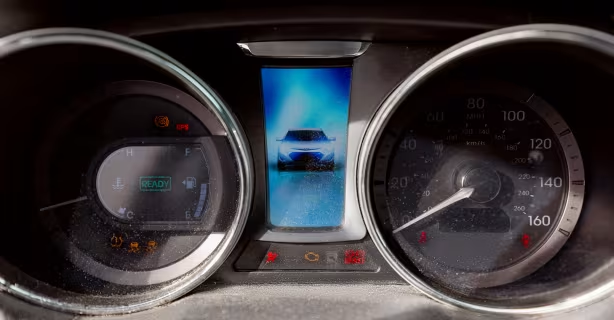
Constant dashboard warnings deserve attention even when the car still feels normal. Some lights signal minor maintenance needs, while others point to problems that can damage the engine, charging system, brakes, or other components if ignored. The best response is to identify the warning, judge its urgency, and investigate the cause instead of repeatedly clearing or dismissing it.
Read the Warning Before Assuming the Worst
Start with the exact symbol rather than guessing from its color alone. Your owner’s manual explains vehicle-specific dashboard lights, including warnings that may look similar across different models.
Searching through broader online reading may provide general context, but the manufacturer’s manual should remain your first reference because warning systems differ between cars. Notice whether the light stays solid, flashes, appears only during startup, or arrives with changes in temperature, steering, braking, or engine performance.
Color Helps, but Context Matters
Red warnings often deserve faster attention than yellow or amber indicators, but color isn’t the whole diagnosis. A flashing warning accompanied by rough running or overheating deserves a different response from a routine service reminder.
Know Which Signals Should Change Your Driving
Some warnings allow time for inspection, while others mean continuing to drive could turn a manageable repair into a major failure. People browsing mixed-topic online content can encounter conflicting advice, so the combination of the warning symbol, vehicle behavior, and manufacturer guidance matters more than a generic explanation.
| Warning | Possible Issue | Practical Response |
|---|---|---|
| Oil-pressure light | Low oil pressure | Stop safely and investigate |
| Temperature warning | Engine overheating | Stop before severe overheating |
| Battery light | Charging-system fault | Limit driving and inspect |
| Check-engine light | Engine/emissions fault | Diagnose based on behavior |
A check-engine light that remains solid while the vehicle drives normally may not require the same immediate response as an overheating warning. Still, delaying diagnosis for weeks can allow a small issue to become more expensive.
Check Simple Problems Without Creating New Ones
Begin with safe observations. Check whether the fuel cap is secure if appropriate for your vehicle, look beneath the car for obvious leaks, listen for new noises, and notice whether gauges are outside their normal range.
Never open a hot cooling system. Pressurized coolant can cause serious burns. After the engine has cooled completely, fluid levels can be checked according to the owner’s manual.
General daily web content may help you build questions to ask, but an OBD diagnostic scan or professional inspection can provide information that dashboard symbols alone cannot.
Record What Happens Around the Warning
Write down when the light appears. Include engine temperature, speed, weather, recent maintenance, unusual sounds, and whether the warning disappears after restarting.
Patterns can make diagnosis easier. A light appearing during acceleration, for example, gives a technician more useful information than simply saying it comes on occasionally.
Where Drivers Often Go Wrong
One mistake is assuming that a car must be safe because it still drives normally. Many developing problems produce warnings before performance changes become obvious.
Another mistake is replacing parts based only on a fault code. Diagnostic codes identify where the vehicle detected a problem, but they don’t always identify the failed component by themselves. Clearing the code without fixing the cause can also hide useful diagnostic information temporarily.
Ignoring several lights because they appeared together can be risky as well. One electrical or charging problem can sometimes trigger multiple warnings, which makes proper diagnosis more useful than guessing at each light separately.
When the Car Needs Professional Attention
Stop driving as soon as it is safe when a serious warning appears with overheating, loss of oil pressure, heavy smoke, significant fluid loss, major braking changes, or sudden loss of power. Arrange professional inspection rather than trying to reach your destination at any cost.
For less urgent recurring lights, schedule diagnosis before the next long trip or demanding drive. Bring your notes and maintenance history. Giving the technician a clear timeline can shorten the search for an intermittent fault.
Frequently Asked Questions
Why does my dashboard warning keep coming back after resetting it?
Resetting a warning does not repair the condition that triggered it. If the underlying fault remains, the vehicle’s monitoring system can detect it again and illuminate the warning after additional driving.
Can a weak battery cause several dashboard warnings?
A weak battery or charging-system problem can sometimes contribute to unusual electrical behavior and multiple warnings. Because several unrelated faults can produce similar symptoms, testing the battery and charging system is more useful than assuming the battery is responsible.
Is it safe to drive with a check-engine light on?
It depends on how the vehicle behaves and whether the light is solid or flashing. A recurring light should be diagnosed, while a flashing light or serious performance problem may justify stopping and arranging professional assistance.
Deal With Warnings While You Still Have Options
A dashboard light is most useful before the vehicle leaves you stranded. Identify the symbol, pay attention to accompanying symptoms, record when it appears, and get recurring problems diagnosed rather than hoping they disappear. Addressing a developing fault early gives you more control over when, where, and how the repair gets handled.