
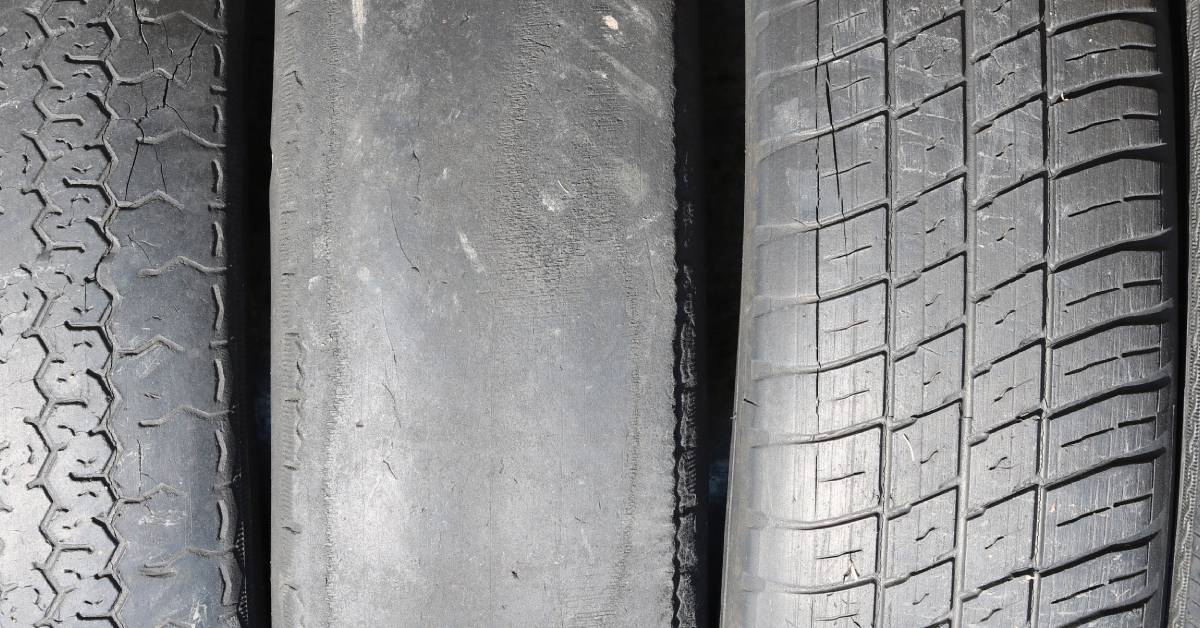
Tires rarely wear at exactly the same rate on all four corners of a vehicle. Steering forces, braking, drivetrain layout, alignment, and normal road conditions can make one pair wear faster than another. Poor tire rotation allows those differences to build until tread becomes noticeably uneven and replacement may arrive sooner than expected.
Regular rotation helps distribute wear more evenly, but it cannot repair damage that has already developed.
Why Tire Rotation Changes the Wear Pattern
Front tires often handle more steering and braking work, while driven wheels also deal with acceleration forces. The exact wear pattern depends on whether the vehicle is front-wheel drive, rear-wheel drive, all-wheel drive, or four-wheel drive.
Rotation moves tires to different positions so one tire doesn’t spend its entire service life doing the hardest job. General automotive reading material may discuss maintenance from different angles, but your owner’s manual should determine the approved rotation pattern for your vehicle.
Follow the Vehicle’s Recommended Pattern
Some vehicles use different tire sizes front and rear, while others have directional tires that can only rotate in certain directions. Those setups may limit where each tire can move.
Check the owner’s manual or tire manufacturer’s instructions instead of assuming the traditional front-to-back pattern works for every vehicle.
Watch for Uneven Wear Before Rotating
Rotation works best as preventive maintenance. Before moving the tires, examine the tread across the inside edge, center, and outside edge.
Information found through independent online publications can broaden your maintenance reading, but visible tire condition should guide the inspection. Feathered tread, severe edge wear, cupping, or one tire wearing much faster than the others may point to alignment, suspension, pressure, or wheel-balance problems.
| Wear Pattern | Possible Connection | Useful Next Check |
|---|---|---|
| Both outer edges | Low pressure or cornering wear | Check inflation |
| One edge | Alignment problem | Inspect alignment |
| Cupped sections | Balance or suspension issue | Check wheel and suspension |
| Center wear | Excessive inflation possible | Verify pressure |
Rotation alone won’t correct the underlying mechanical cause.
Build Rotation Into Routine Maintenance
A practical approach is to inspect tire pressure and tread whenever the vehicle receives other routine service. This makes forgotten rotations less likely and gives you repeated opportunities to spot abnormal wear.
Keep a simple service record. Notes from general information sources may help organize broader research, but your own mileage and service history are more useful for determining when the last rotation occurred.
Check More Than Tread Depth
Look for embedded objects, sidewall bulges, cracking, unusual vibration, or damage around the bead. Inspecting all four tires together makes differences easier to notice.
Correct tire pressure using the vehicle manufacturer’s recommended specification, normally found on the driver’s door-area label or in the owner’s manual rather than the maximum pressure printed on the tire sidewall.
Common Rotation Mistakes That Shorten Tire Life
The biggest mistake is treating rotation as a cure for every wear problem. A tire that has developed serious alignment-related wear will not become normal simply because it moves to another corner.
Another mistake is rotating without checking inflation. Moving an underinflated tire while leaving the pressure problem unresolved simply moves the problem with it.
Skipping several rotations and then relying on one late rotation can also produce disappointing results. Prevention matters more than trying to redistribute severe wear after it has already formed.
Frequently Asked Questions
Can rotating tires fix uneven tread?
It may help prevent additional uneven wear, but it cannot restore tread that has already worn away. Significant irregular wear should also prompt checks for inflation, alignment, balance, or suspension problems.
Do all four tires need to be rotated?
Many vehicles rotate all four, but tire size, directional tread, drivetrain design, and manufacturer instructions can change the correct pattern. Always confirm the approved arrangement for your specific vehicle.
Should tires be balanced during every rotation?
Balancing is not automatically required every time. It becomes more relevant when there is vibration, uneven wear, a lost wheel weight, tire replacement, or another indication that wheel balance may be incorrect.
Keep Tire Wear Predictable
A tire rotation schedule is most useful when paired with pressure checks and regular visual inspection. Follow the vehicle manufacturer’s guidance, record completed rotations, and investigate unusual wear instead of simply moving the affected tire. Catching the cause early can protect tread life and reduce the chance of replacing tires prematurely.