
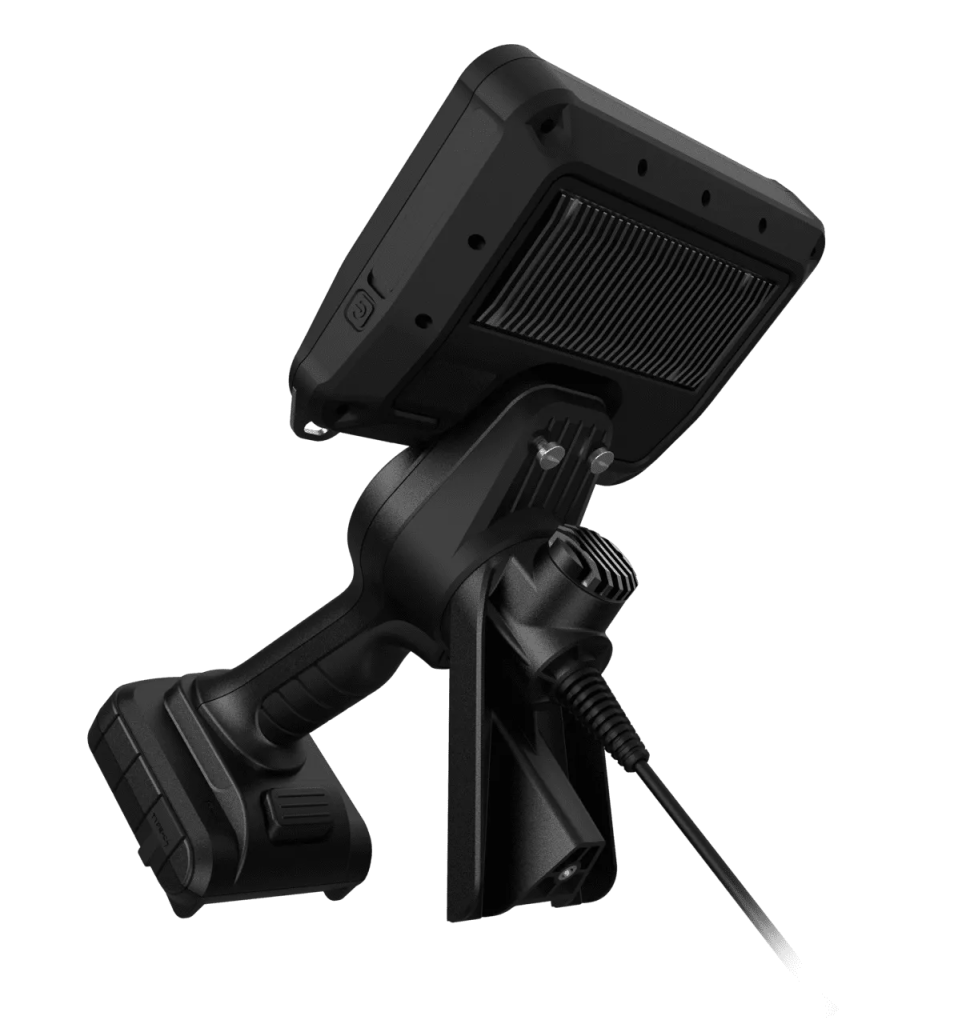
A borescope inspection is rarely limited by what the camera can see. More often, it is limited by whether the technician can steer the tip where it needs to go, hold it there steadily, and return to the same spot for confirmation. Aircraft engines are packed with curved surfaces, tight turns, and components that create narrow sightlines. In that environment, articulation is not a convenience feature. It is a performance feature that directly affects inspection quality.
Joystick articulation, like the control approach used on the USA3000J-6 from USA Borescopes, is designed to give technicians smooth, precise tip movement in spaces where small adjustments make the difference between a clear, decision-ready image and an uncertain capture. When inspections involve documentation, measurement, and repeatable findings, articulation becomes one of the most important factors in the entire workflow.
The Real Job Is Controlled Navigation, Not Just Viewing
A common misconception about videoscopes is that image quality alone determines inspection effectiveness. In reality, the best camera in the world is not helpful if it cannot be positioned properly. Inside an engine, you may need to navigate past stators, around vanes, and along curved passages while maintaining awareness of where the tip is relative to sensitive surfaces.
Controlled navigation matters because it impacts:
- The ability to reach the target area without excessive manipulation
- The likelihood of maintaining a stable view once the area is found
- The ability to re-acquire the same defect for confirmation or documentation
- The consistency of inspection results across technicians and shifts
In practice, articulation determines whether a technician can make deliberate moves or is forced into repeated repositioning. Repositioning costs time and increases the risk of losing the target area. It also makes it harder to produce consistent evidence for maintenance records.
How Joystick Articulation Improves Inspection Quality
When movement is smooth and predictable, inspection quality improves in ways that are easy to overlook until you experience the alternative. Joystick articulation supports fine control, allowing technicians to steer through complex geometry without overshooting and without forcing the probe into awkward positions.
Fine movement for target reacquisition
Finding a defect is one thing. Being able to return to it is another. In engine inspections, technicians often need to relocate a feature after changing viewpoint, adjusting lighting, or switching between a wider context shot and a detailed capture.
With precise articulation, the tip can be nudged into position in small increments, making it easier to line up on the same edge or feature repeatedly. That matters for:
- Confirming whether an indication is real or an artifact
- Capturing consistent documentation images
- Comparing images across inspection intervals
- Supporting second-party reviews by quality or engineering teams
If tip control is inconsistent, a technician may struggle to return to the exact location, which can create gaps in documentation and increase the chance of re-inspections.
Stable framing for measurement and comparison
Even if your inspection goal is primarily visual, stability still matters. Blurry edges, drifting framing, and constantly changing angles reduce confidence in what the image shows. For measurement-focused inspections, stability becomes critical.
A measurement-ready view requires the defect boundary to be clearly visible and framed without motion. Joystick articulation supports that by making it easier to hold an exact angle while capturing a still image or video sequence.
It also improves comparability. When inspection images are taken from consistent angles and distances, it is far easier to compare them over time and determine whether a feature is stable or changing.
Safety and Hardware Longevity Benefits
Smooth articulation is not only about image quality. It also contributes to safer inspections, especially in areas where clearance is minimal and surfaces are sensitive.
When technicians lack precise control, they may be forced to use more cable manipulation or bigger movements to compensate. That can increase the risk of:
- Tip contact with blades, vanes, or adjacent features
- Sudden movements that produce poor captures
- Unnecessary stress on probe components due to forced positioning
By enabling more deliberate movement, joystick articulation can reduce the tendency to force the probe. That helps protect the equipment and can reduce the chance of creating avoidable issues during inspection.
In busy maintenance environments, this also supports training and standardization. A control system that is intuitive and predictable can help newer technicians build good habits, while experienced technicians can work faster without sacrificing capture quality.
Time Savings That Maintenance Teams Actually Feel
Time savings in borescope inspections do not come from rushing. They come from reducing wasted movements and repeated passes. When articulation is responsive and predictable, technicians can spend more time documenting the target area and less time fighting the geometry.
Joystick articulation can reduce time in several practical ways:
- Faster localization of inspection targets
You can steer into position more efficiently without overshooting. - Fewer re-insertions
Better control makes it easier to reach the target on the first attempt. - Cleaner first-pass documentation
Stable framing reduces the need to retake images. - Easier collaboration and review
High-quality, repeatable captures reduce follow-up questions and rechecks.
These gains matter most when inspections are frequent and when the same routes are repeated across a fleet. Small reductions in inspection friction add up quickly in real maintenance schedules.
Connecting Articulation to Measurable Results
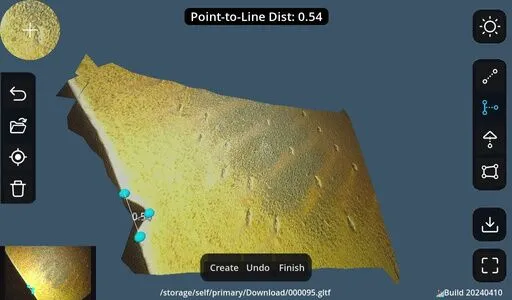
Articulation and measurement are closely linked. Measurement capability is only as good as the view used to capture the defect. If the tip drifts, if the angle is unstable, or if the defect is framed inconsistently, measurement confidence declines.
Joystick articulation supports measurement by improving three key variables:
- Angle control
Defect edges are easier to define when the viewing angle is deliberate and stable. - Distance discipline
Precise movement helps maintain a useful working distance rather than oscillating between too close and too far. - Repeatable positioning
Measurement often benefits from confirming with a second capture. Returning to a consistent view is easier when articulation is smooth.
This is one reason the USA3000J-6 is positioned as more than an imaging tool. It combines dual view imaging, measurement capability, and joystick articulation in one system designed for practical inspections in complex geometry. Readers can review the configuration and inspection workflow features on the USA3000J-6 joystick articulation 6mm dual view 3D measuring videoscope page.
Aircraft borescope inspections demand more than visibility. They demand control. Joystick articulation helps technicians navigate complex engine geometry, re-acquire targets reliably, and capture stable, review-ready evidence. It also supports measurement workflows by improving angle stability and positioning consistency, which can reduce uncertainty and help teams make faster, better-supported maintenance decisions.
For maintenance teams evaluating inspection equipment, USA Borescopes provides a wide selection of inspection solutions and can help match a system to real inspection paths and documentation requirements. To learn more about USA Borescopes or to discuss which configuration best fits a specific inspection need, readers can contact their team.
About The Author
The author is an independent aviation inspection technology specialist with long-term experience supporting borescope inspection programs. They focus on improving inspection consistency through better workflows, documentation standards, and equipment selection. Their writing emphasizes real-world usability, repeatable results, and decision-ready evidence, and they are not affiliated with any manufacturer or distributor.


